IIoT Platform🏭 Industry 4.0 Ready
Digital-Twins
Virtual Replica & Real-Time Industrial Asset Simulation
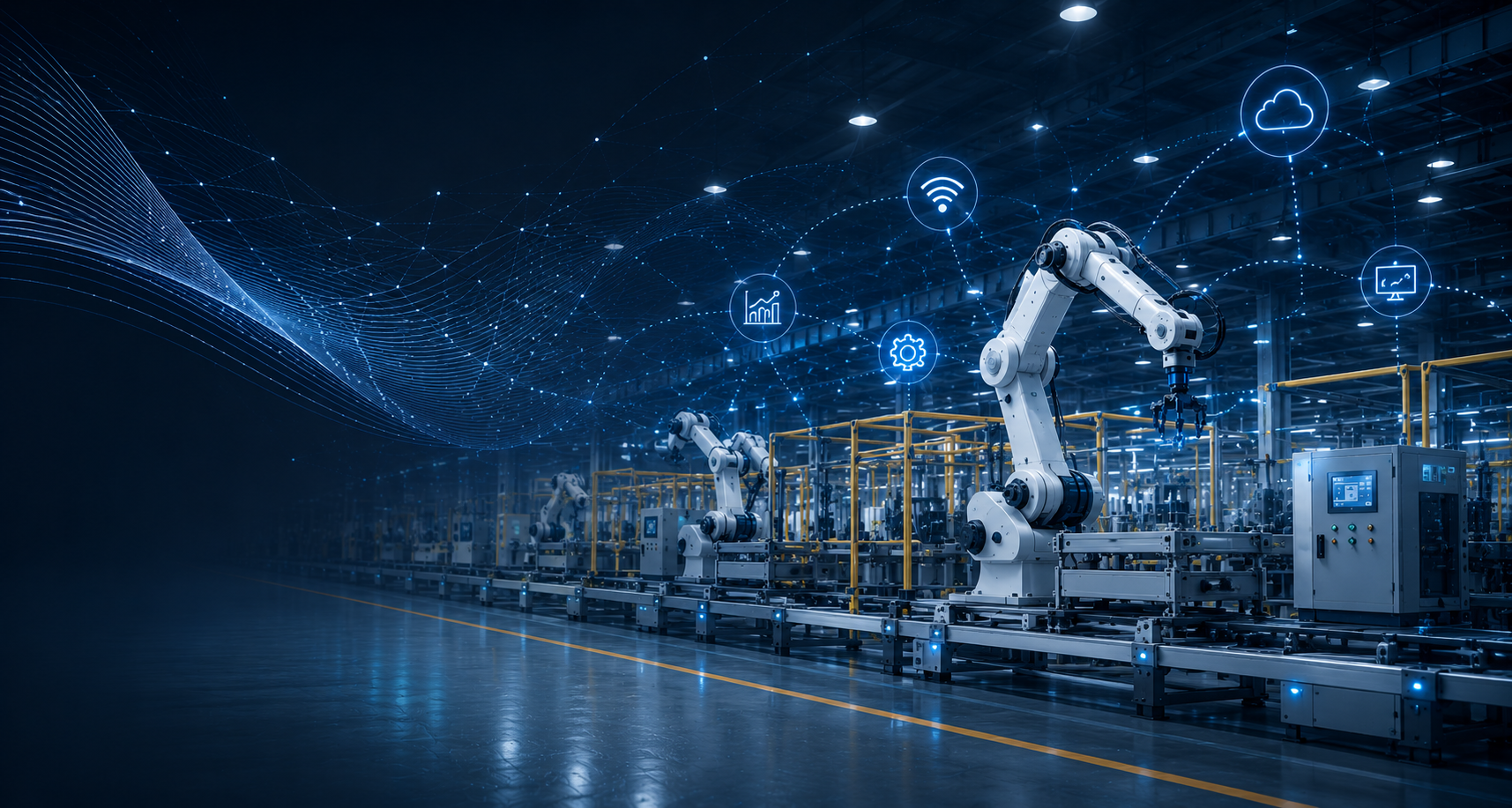
Mirror your physical industrial assets in a live digital environment. Simulate, monitor, predict, and optimize every machine, process, and plant operation before changes hit the shop floor.
The Problem
The Visibility & Simulation Challenge
Industrial operations run blind — without a virtual mirror of assets, teams react to failures instead of preventing them, and test changes on live equipment at great risk.
Challenges
Core Challenges
🔍
No Virtual Asset Mirror
Teams lack a live digital replica of machines and processes — every configuration change must be tested on real equipment, risking downtime and damage.
⚠️
Reactive Maintenance Culture
Without predictive simulation, maintenance teams respond only after failures occur — leading to unplanned downtime and production loss.
📉
Inefficient Process Optimization
Process changes are trial-and-error on live systems — no safe virtual environment to simulate outcomes before deployment.
🔗
Disconnected Asset Data
Sensor data, PLC signals, SCADA outputs, and historian logs exist in silos — no unified virtual model correlates them into actionable insight.
📊
Poor Lifecycle Visibility
Asset health trends, wear rates, and remaining useful life are unknown — capital planning relies on guesswork rather than simulation-backed forecasts.
🏗️
Risky Plant Modifications
Layout changes, line rebalancing, or new equipment commissioning are validated only in production — failures are expensive and dangerous.
Features
Key Features
🖥️Digital Twin Core
Live Asset Digital Twin
Create a real-time virtual replica of any industrial asset — motor, pump, furnace, conveyor, or entire production line — synchronized with live sensor data.
📐Digital Twin Core
3D Plant Model Integration
Embed digital twins within a 3D plant model for spatial context — visualize asset health, alerts, and KPIs directly on the virtual plant floor.
🔮Simulation
Predictive Simulation Engine
Run what-if simulations on virtual assets — predict failure modes, test maintenance interventions, and evaluate process changes without touching live equipment.
📡Digital Twin Core
Multi-Protocol Data Sync
Ingest real-time data from OPC-UA, MQTT, Modbus, REST APIs, and SCADA systems to keep digital twins continuously synchronized with physical assets.
🤖Simulation
AI-Driven Anomaly Detection
Machine learning models trained on twin historical data detect deviations from normal operating envelopes — trigger alerts before physical failures occur.
📊Simulation
Real-Time Performance Dashboard
Monitor KPIs, health scores, efficiency metrics, and remaining useful life across all digital twins from a unified, role-based dashboard.
🔁Digital Twin Core
Closed-Loop Feedback Control
Push optimized setpoints from the digital twin back to PLCs and controllers — enabling automated, simulation-validated process adjustments.
🗂️Simulation
Asset Lifecycle Management
Track complete asset lifecycle — from commissioning to decommissioning — with twin-based wear analysis, maintenance history, and capital planning forecasts.
Implementation
Implementation
Step-by-step implementation process
01
Define Asset Model
Configure the digital twin schema — define asset hierarchy, data points, operating parameters, and thresholds using the Twin Builder interface.
02
Connect Physical Data Sources
Integrate sensors, PLCs, SCADA systems, and historians via OPC-UA, MQTT, or REST APIs — live data begins populating the twin instantly.
03
Calibrate & Validate Twin
Compare twin model outputs with real asset behavior — calibrate physics models and AI baselines to ensure accurate virtual representation.
04
Run Simulations & What-If Scenarios
Use the simulation engine to test process changes, predict failure timelines, and optimize operating conditions in the virtual environment.
05
Monitor & Act on Insights
Receive real-time anomaly alerts, predictive maintenance recommendations, and performance insights from the live digital twin dashboard.
06
Deploy & Close the Loop
Push validated setpoints and configurations back to physical assets via controller integration — continuously improving with twin-informed automation.
Industries
Industry Applications
⚙️
Rotating Equipment
Twin motors, pumps, and compressors — monitor vibration signatures, predict bearing failures, and optimize lubrication schedules before failures occur.
🔥
Industrial Furnaces & Kilns
Model thermal profiles digitally — simulate heating cycles, optimize energy usage, and predict refractory wear without interrupting production.
🏗️
Assembly Lines
Create virtual assembly line replicas — simulate throughput changes, identify bottlenecks, and validate line rebalancing before physical reconfiguration.
⚡
Power & Energy Systems
Twin transformers, switchgear, and distribution networks — predict load imbalances, model fault scenarios, and optimize power consumption in real time.
🌊
Water & Fluid Systems
Simulate pump stations, water networks, and process fluid flows — detect leakages virtually, optimize pump scheduling, and model pressure dynamics.
🤖
Robotic & CNC Systems
Mirror robot arms and CNC machines digitally — simulate toolpath changes, predict wear on end-effectors, and reduce setup time through virtual commissioning.
Integrations
Integration Capabilities
🔌
Industrial Protocols
OPC-UA, MQTT, Modbus TCP/RTU, PROFINET, EtherNet/IP for seamless device connectivity
🗄️
Enterprise Systems
SAP, Oracle ERP, MES, CMMS, and historian databases for full operational context
☁️
Cloud & Edge
AWS IoT, Azure Digital Twins, Google Cloud IoT — with on-premise and hybrid options
📊
Analytics & Visualization
Power BI, Grafana, Tableau, and custom 3D visualization tools for twin dashboards
FAQ
Frequently Asked Questions
Everything you need to know
Ready to Mirror Your Plant in the Digital World?
Join industrial leaders using Digital Twins to reduce unplanned downtime by 40%, cut maintenance costs by 30%, and simulate process changes risk-free before deployment.
1
Free asset assessment and twin feasibility study2
Customized twin architecture design for your plant3
ROI analysis with simulation-backed performance projections